Description
“DÈNYE SOUPE – PREMYE TABLO” (THE LAST SUPPER – FIRST PAINTING)
The first work Jafrikayiti ever put on canvas was a copy of “The Last Supper,” created in 1982. Back then, almost every Haitian household in Port-au-Prince displayed an image of (white) Jesus with his 12 disciples. This same image also adorned the *kamyonèt* (pub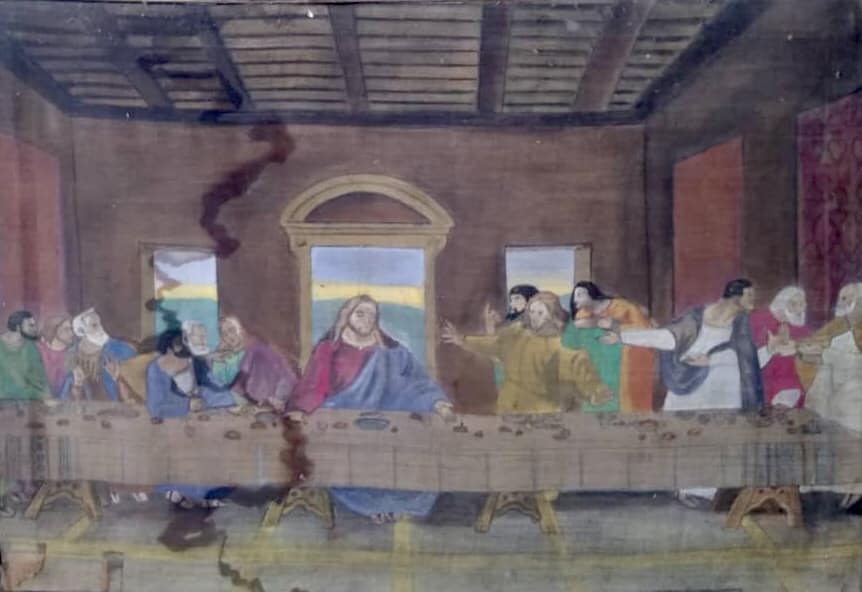 lic transport vans) of Carrefour-Feuilles that traveled along Route des Dalles, passing right in front of Father Saint-Vil’s house. In fact, this first painting is a work of recycling because it is old fabric tanke under mom’s bed that served as the basis for this first adventure. The artist signs the work “Jacqueville De Vinci”
1′ INNOCENT
One day, while I was at the University of Waterloo, I received a letter from Haiti. Back then, my diet consisted mainly of two things: 1) Kraft Dinner (macaroni and cheese), and 2) letters from dear family and friends in Haiti, which would arrive from time to time. In truth, if I managed to graduate from university, it is largely thanks to this second, special kind of “meal.”
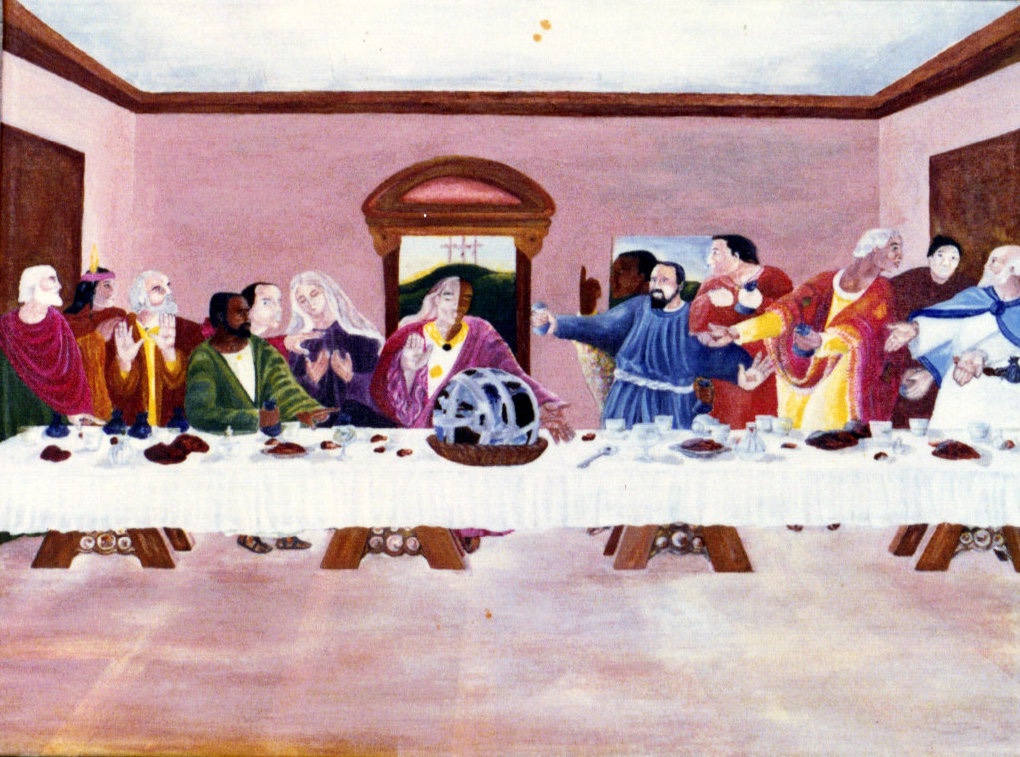
I don’t recall the exact date, but this particular letter was truly special. Father Christian Saint-Vil had sent me an extraordinary, one-of-a-kind gift. It wasn’t just the $100 bill—though that was certainly a welcome addition—but rather another major surprise contained within the letter. Father Christian Saint-Vil wrote to tell me that he had liked my early efforts as a painter—work I had done on a scrap of beige fabric (not even intended for painting) which I had tacked onto a crude, makeshift frame made of four pieces of wood that had never aspired to serve as a support for a work of art. He explained that the money was intended primarily for me to buy art supplies so I could paint something else, much like the piece I had created before leaving Haiti: an attempt to faithfully reproduce Leonardo da Vinci’s *The Last Supper*, based on a photograph of a painting that was quite popular in my home country back when I was just a little kid.
I was very surprised because, not only had I never taken myself seriously as a painter, but I wasn’t even aware that my dad had ever noticed the watercolor scribbles I’d made on scraps of dirty fabric, torn from under my mother’s bed. Around the time I received Father Christian’s letter, I had begun to delve quite boldly into religious matters. The “Plain Truth” folks—*The World Tomorrow* and Pastor Herbert W. Armstrong—had caught my attention. I was also accustomed to visits from Jehovah’s Witnesses who would come through the neighborhood; though, for me, this was mostly an opportunity to pick a fight with them over their refusal to take a stand against the ills plaguing our planet—specifically, the crimes of the Apartheid regime in Azania (South Africa).
In short, as I applied acrylic paint to the canvas, the thought occurred to me that as I grow older, I increasingly discover that we are all flawed—myself included; I have always wanted to do what is right, yet I have constantly felt the limits of my own good intentions when faced with challenges and tribulations. Consequently, the figure of Jesus became compelling to me—someone representing a single innocent soul amidst a vast sea of miscreants. The title of the painting is “1 Innocent.”
If I were to give one of my own children the same gift my father once gave me, what title would they choose? What kind of work would they create? Was my father pleased with my work? It never occurred to me to ask him. His gesture alone was enough. In truth, I am an individual who has received an abundance of blessings from the Great One who created the universe and everything within it. Thank you very much, Father Christian!
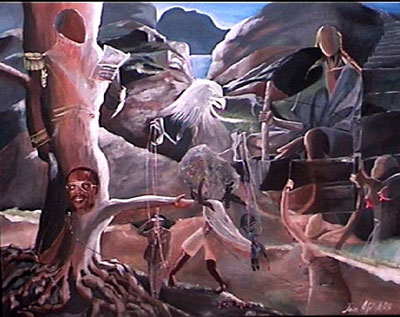
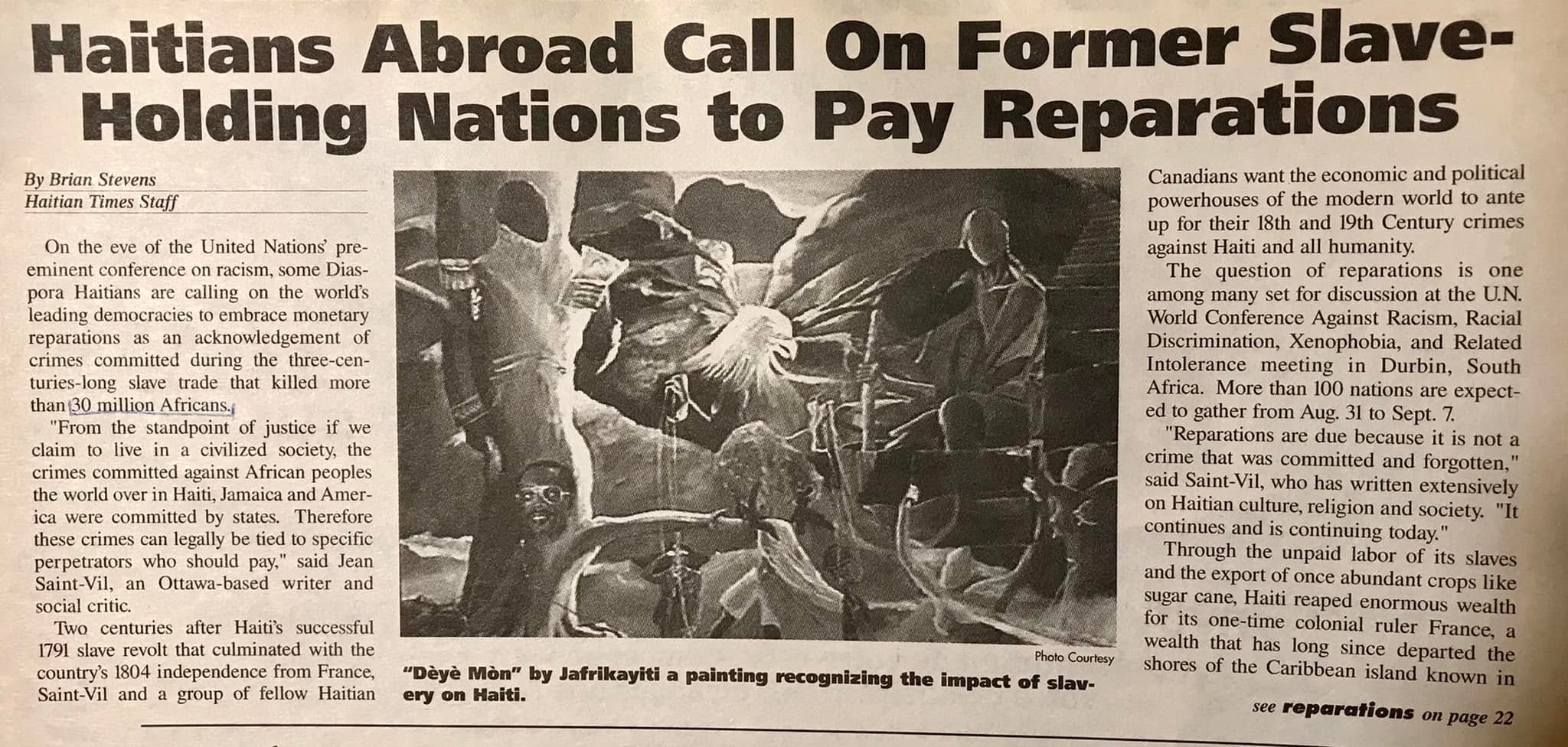
At the time, although I heard rumours that an already beleaguered Aristide government had sent a delegation to South Africa, there was no public discourse on the issues of reparations, restitution or the Haitian stance on the matter. In a detailed interview with veteran journalist Marcus Garcia (Mélodie FM) while in Haiti over the first days of September 2001, and as the Durban Conference was in full motion, I made a passionate plea for Haiti to position itself as a logical leader of the global reparations movement (see Lafimen CD#1).
Reviews
There are no reviews yet.